
Last updated September 10, 2026
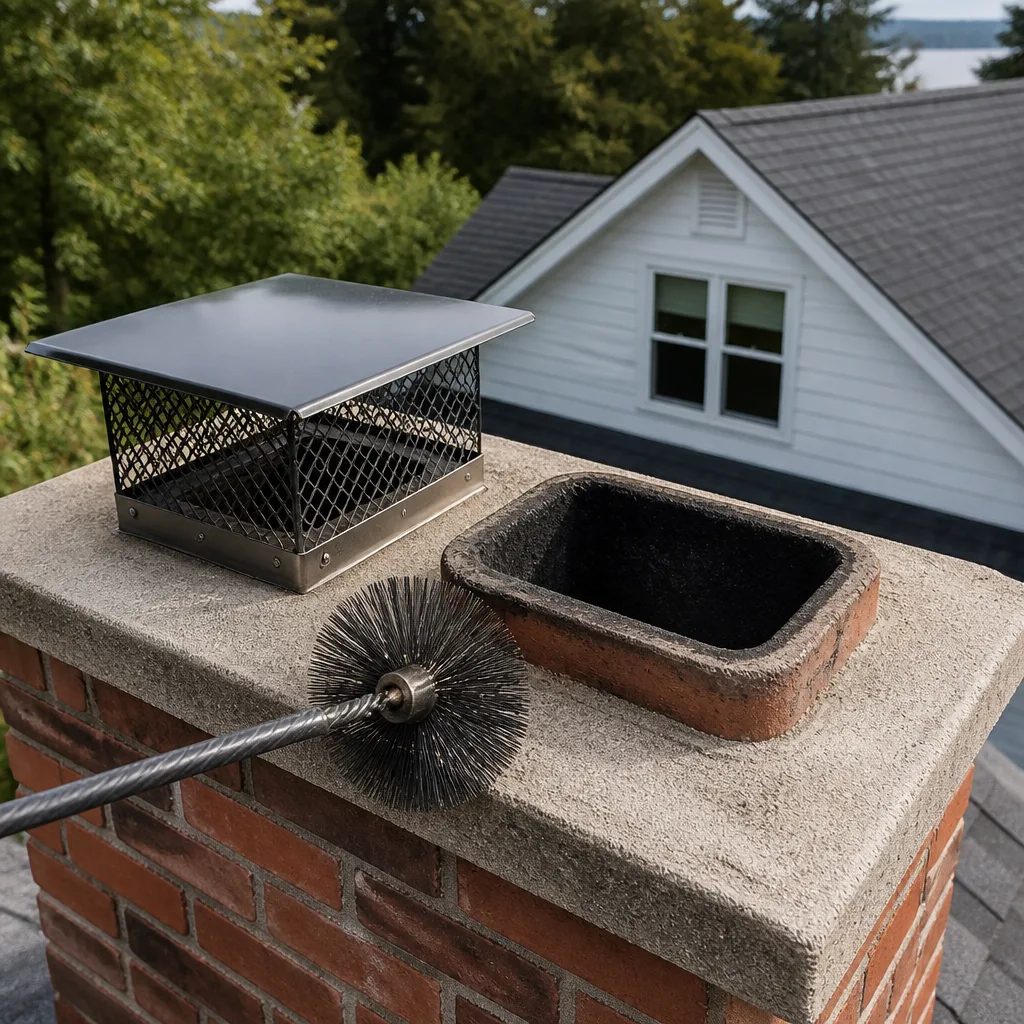
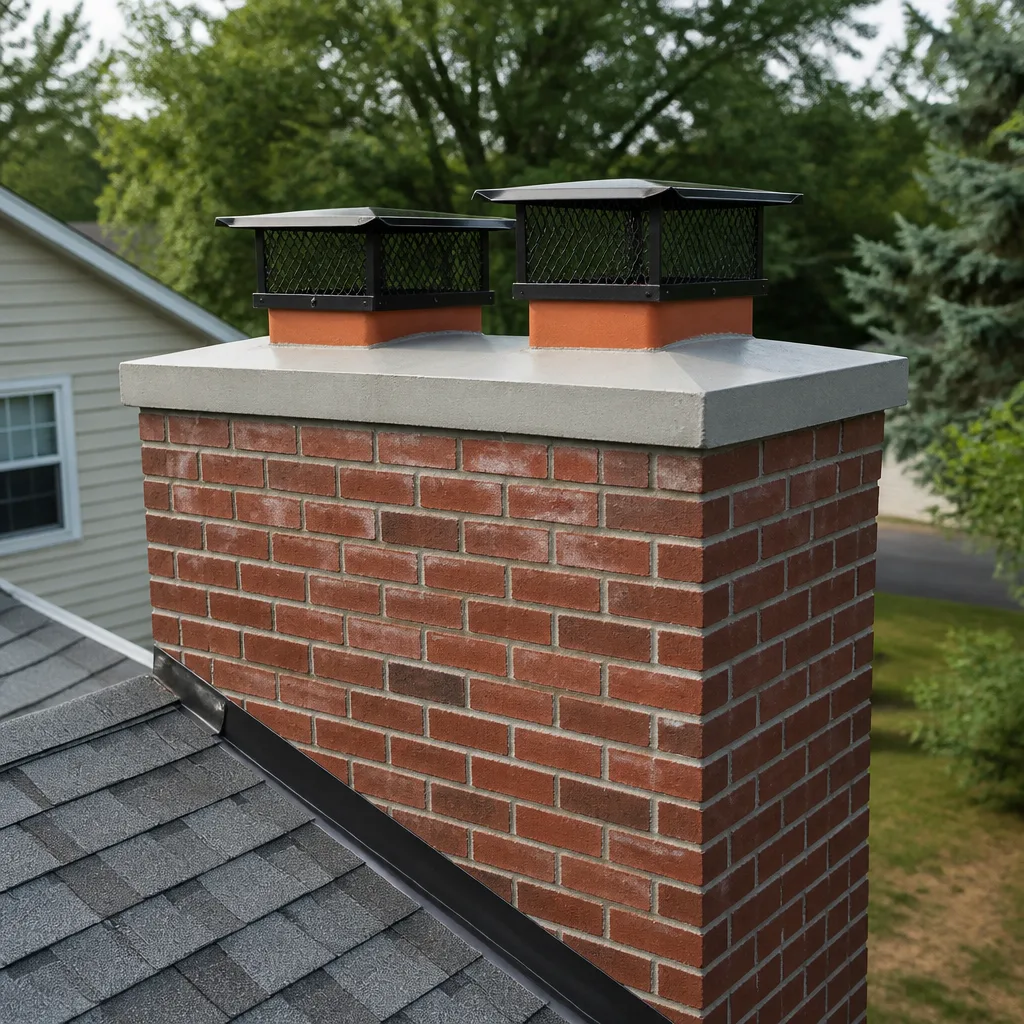
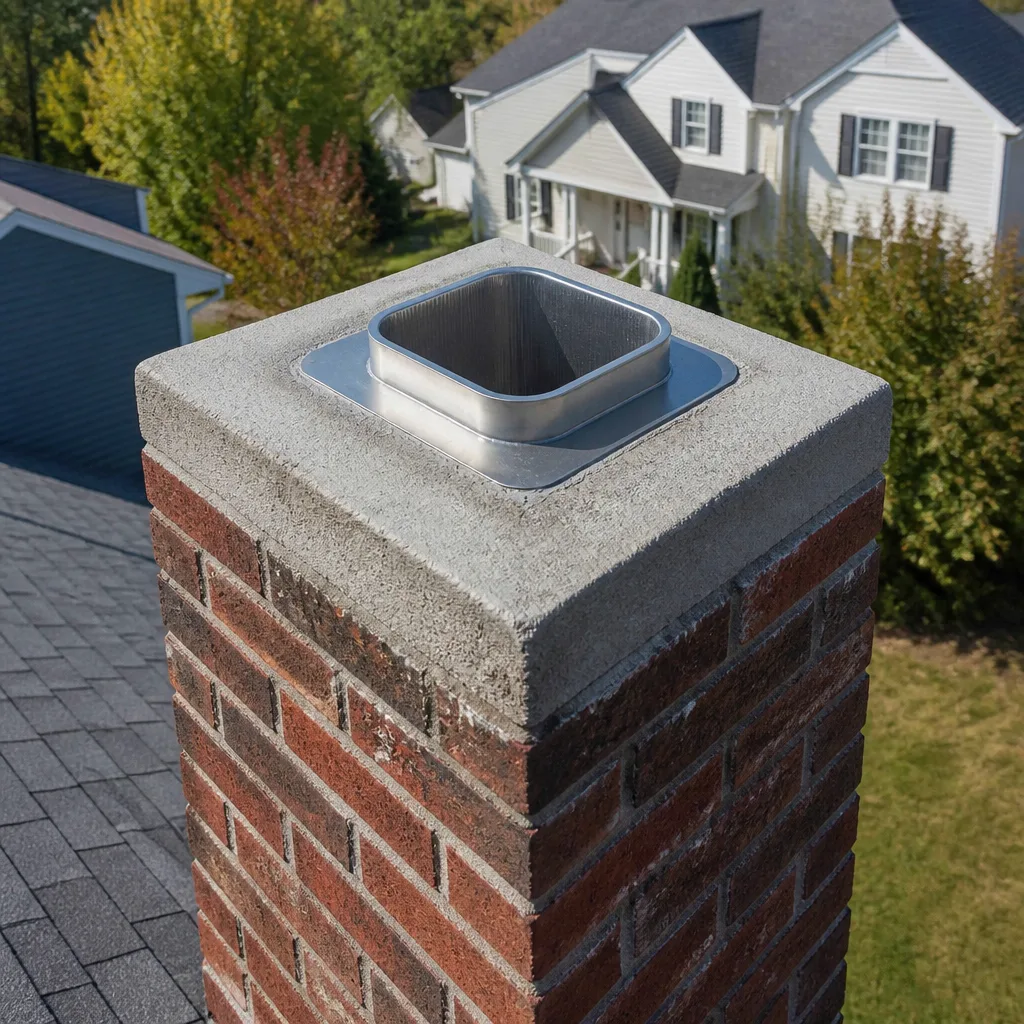
Level 1 sweep and inspection to the NFPA 211 annual standard - flue, crown, cap, and flashing checked and photographed
Chimney sweep logs do not sweep chimneys. They loosen some creosote - which then falls where a brush and vacuum still have to collect it.
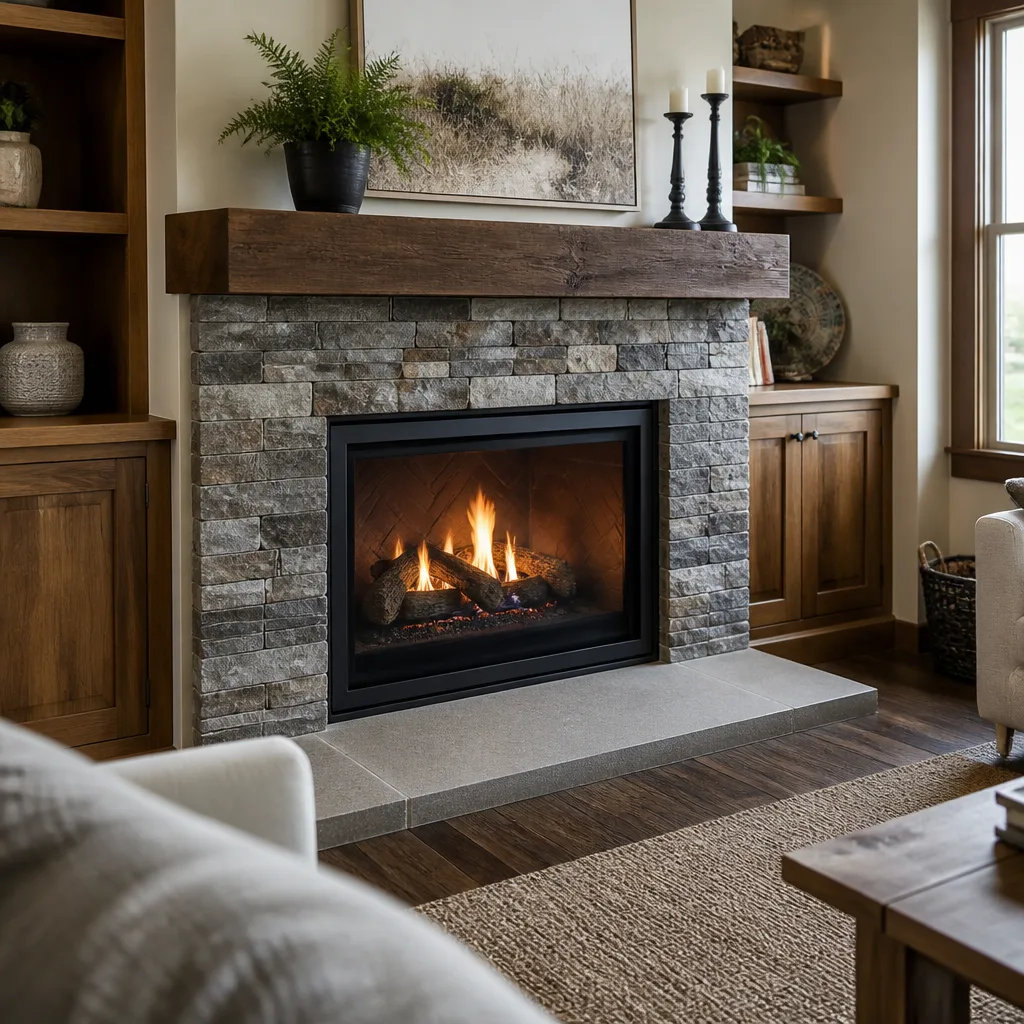
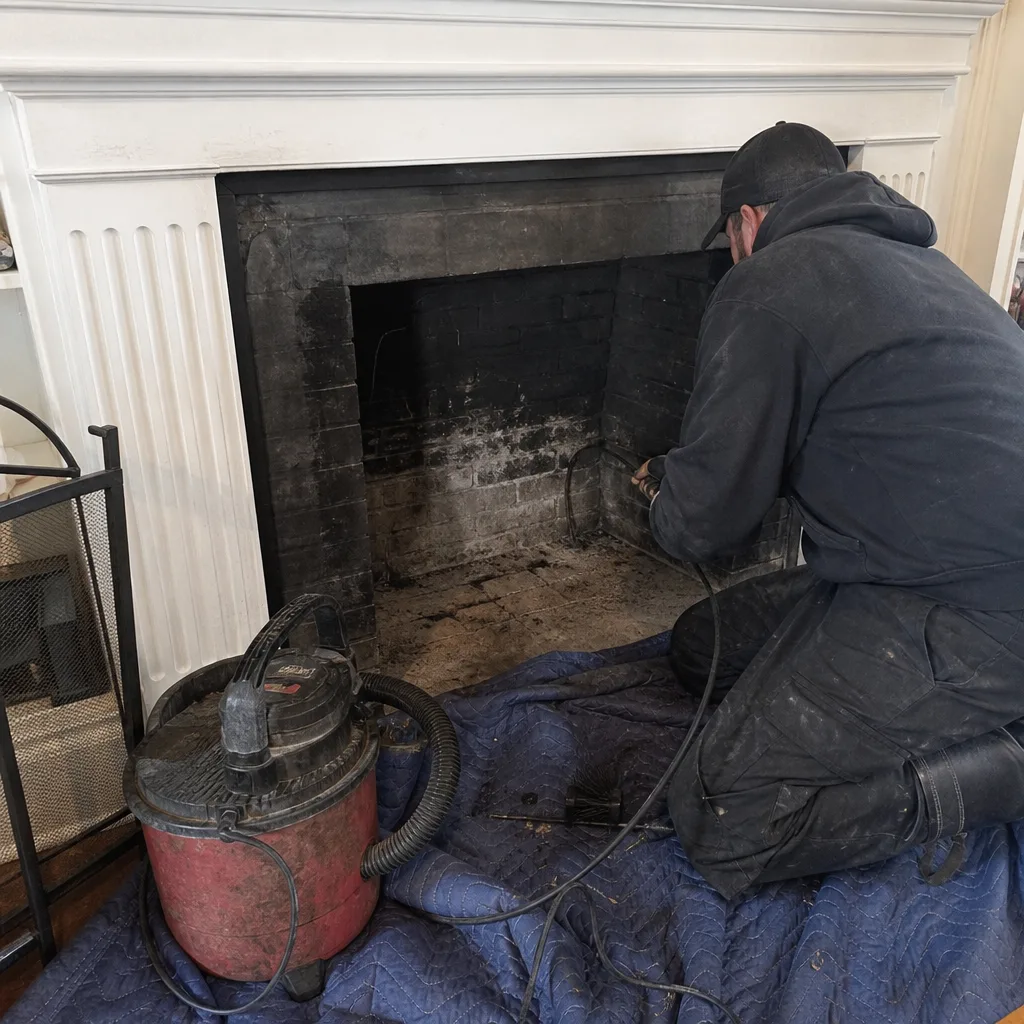 Before
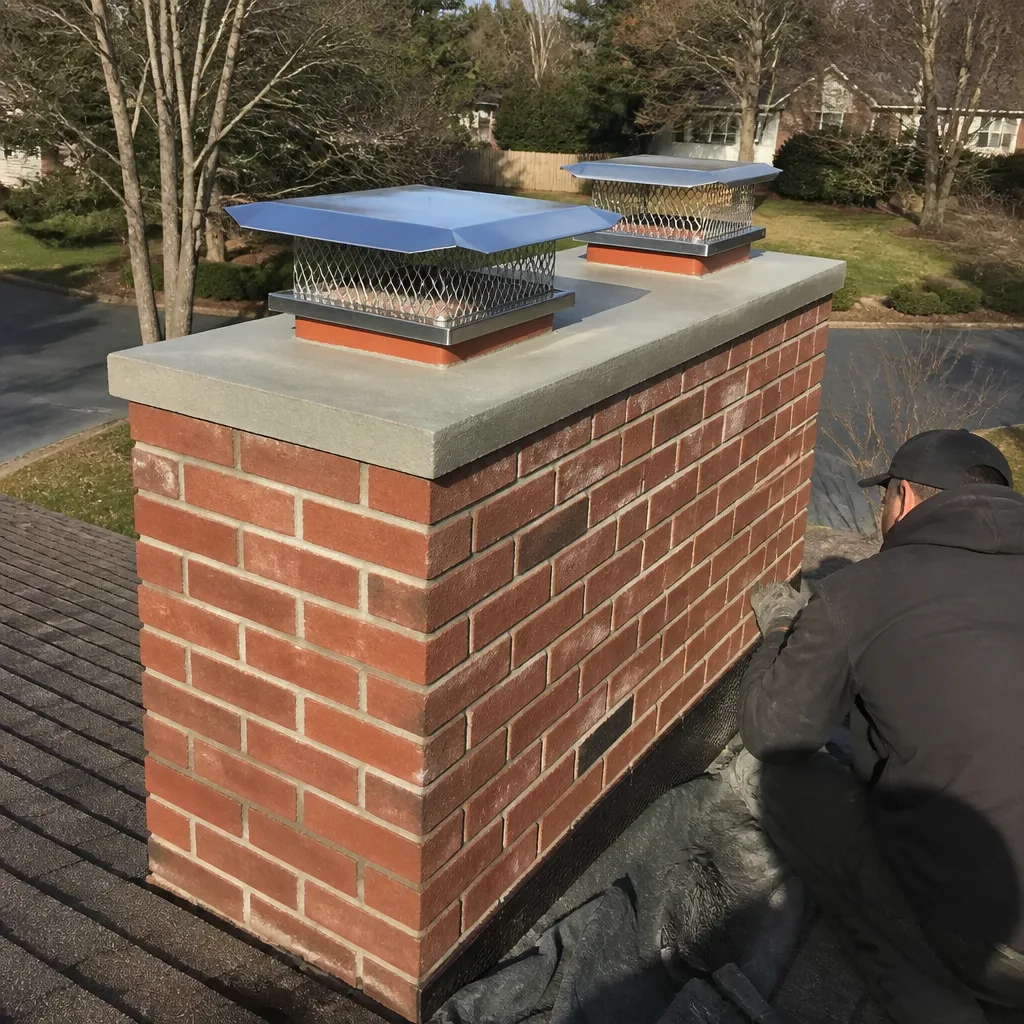 After
After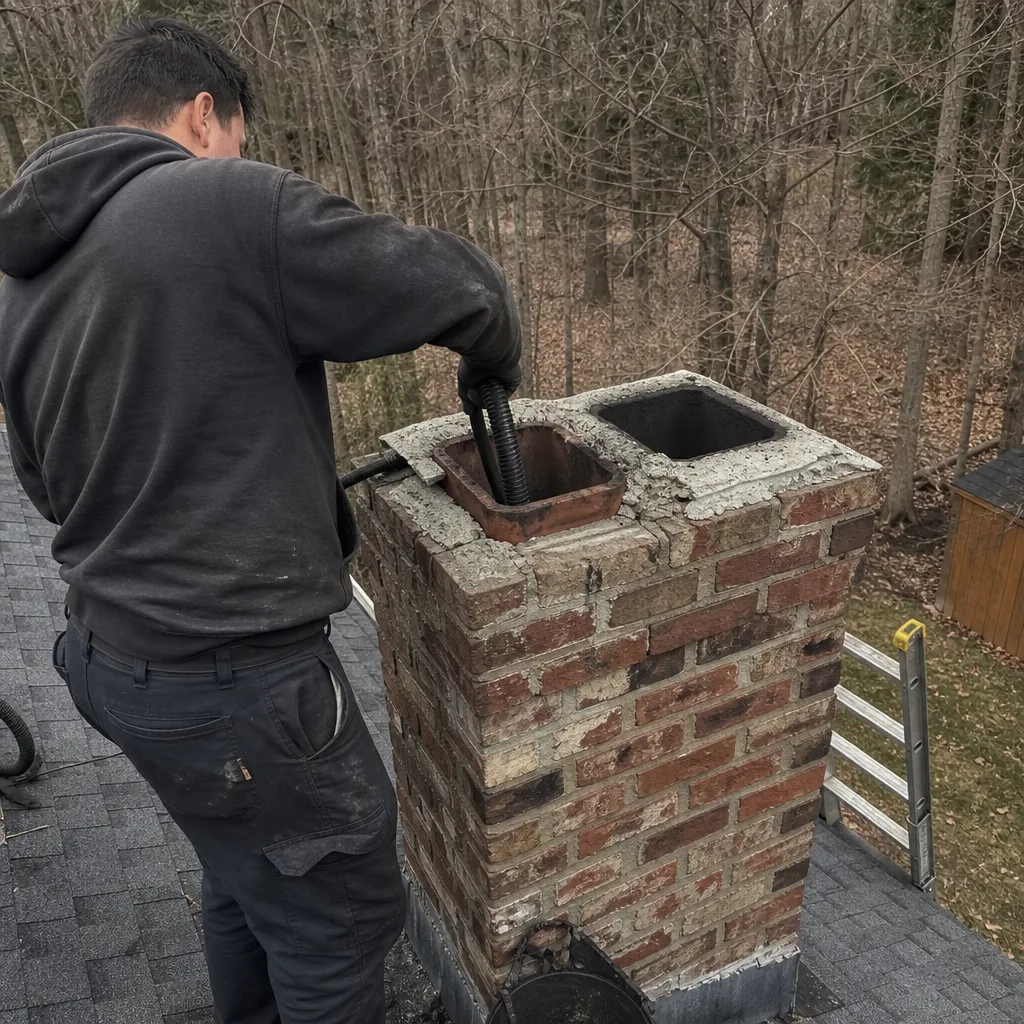 Before
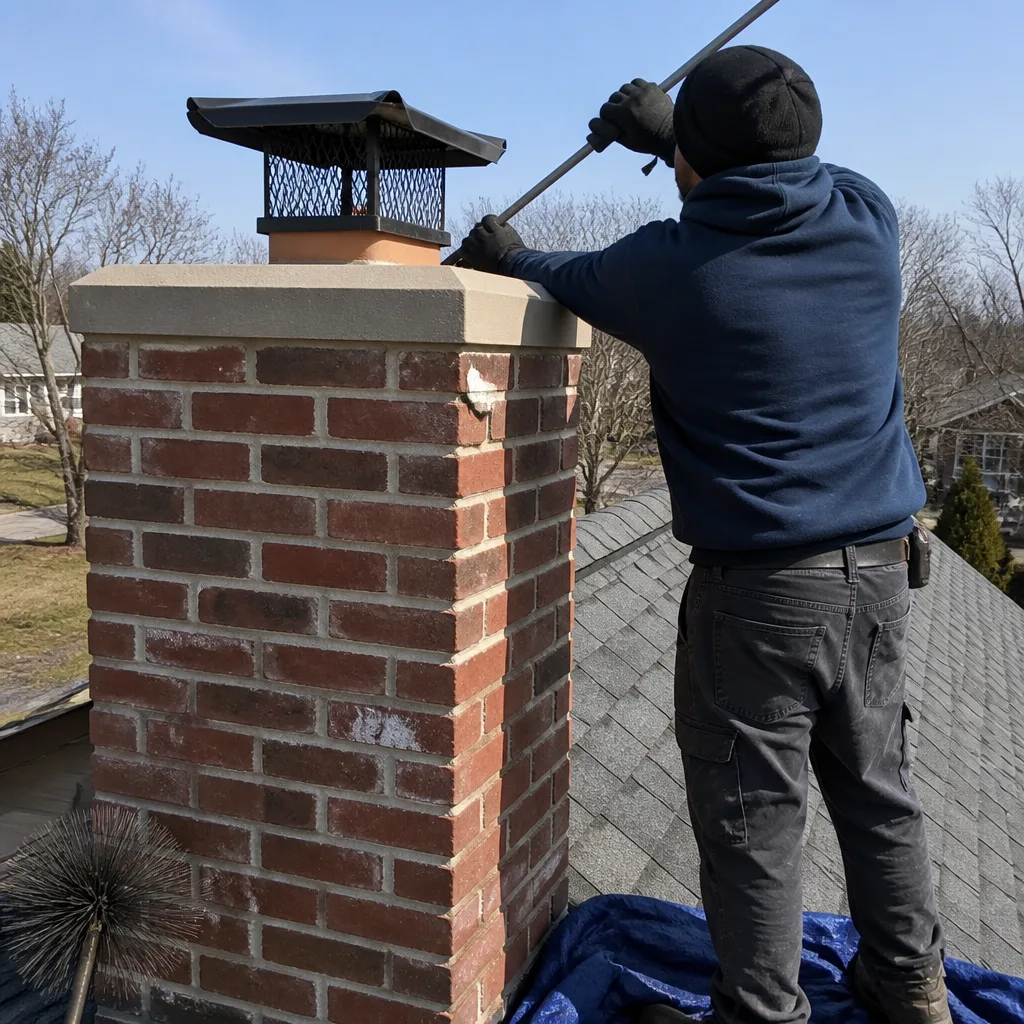 After
After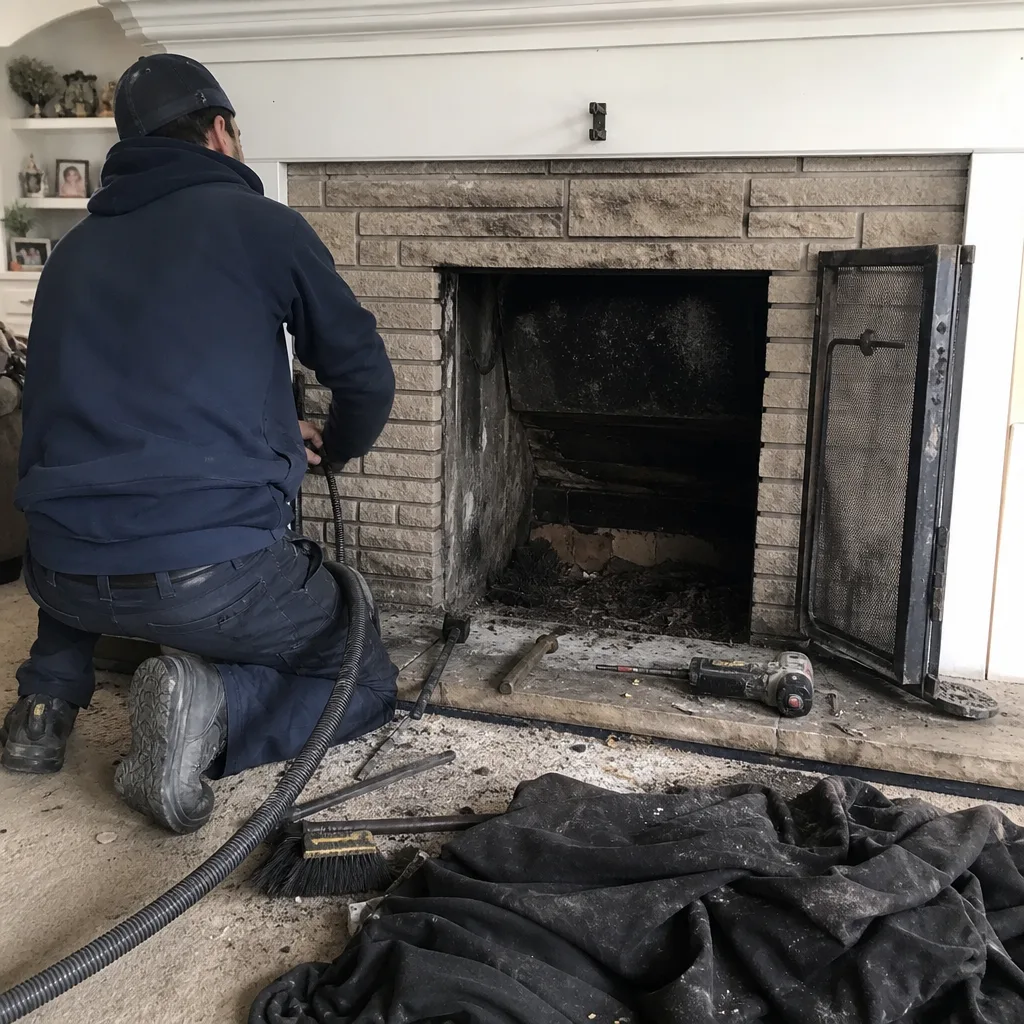 Before
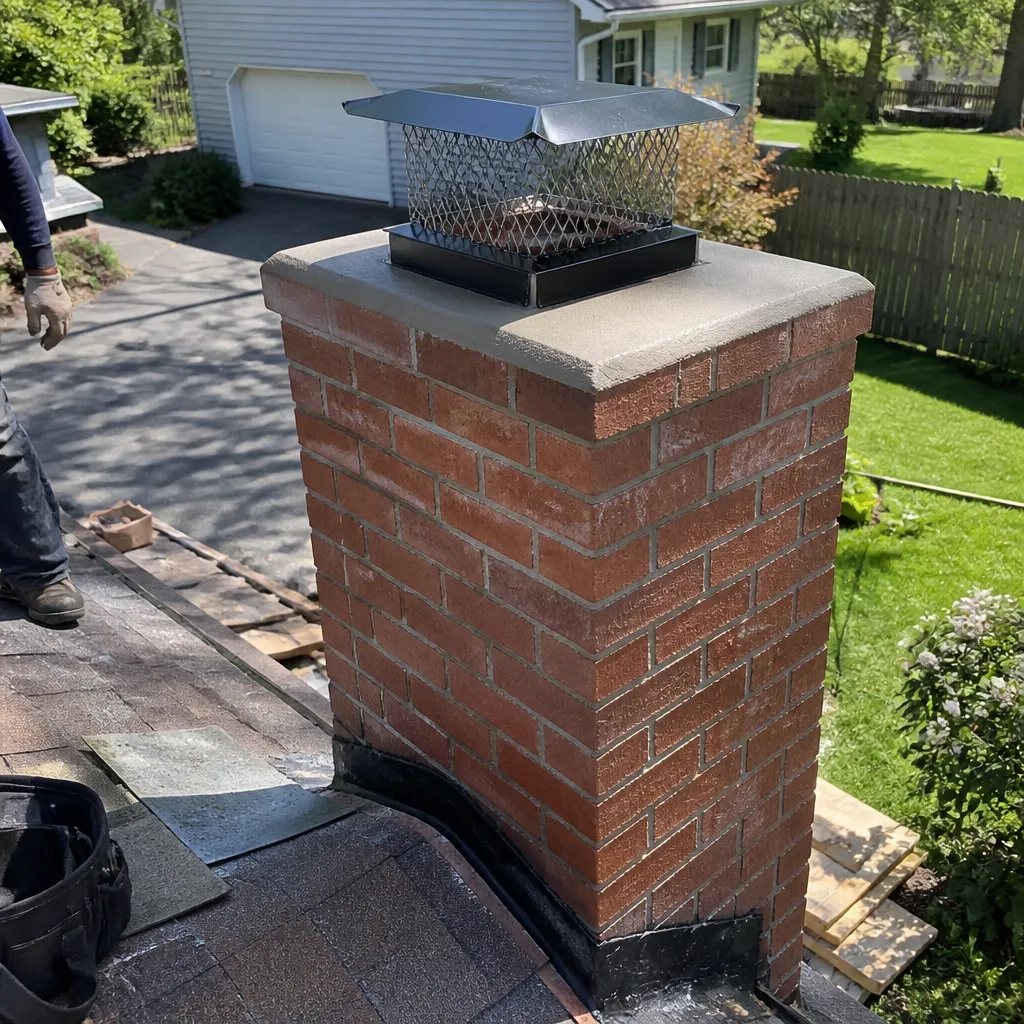 After
AfterDIY vs Professional Chimney Cleaning: The Jamesburg Homeowner’s Decision Guide
You can walk into any hardware store in Middlesex County and buy a chimney brush kit for about $60. You can run it up and down your flue, knock loose some soot, and tell yourself the chimney is clean. But here’s what most DIY guides won’t tell you: soot removal and chimney cleaning are not the same thing. Confusing them is exactly how a Stage 2 creosote deposit goes unrecognized for another season in Jamesburg homes, and by the time anyone notices, the fix costs thousands instead of hundreds. This guide draws the line between what a careful homeowner can do with a brush and gloves, and what should never be touched without a trained sweep standing in the room.
Quick Answer
Most Jamesburg homeowners can safely handle firebox ash removal, damper lubrication, and exterior cap checks themselves. But a full chimney cleaning is a different job: it requires running a properly sized brush through the flue, inspecting the liner for cracks and creosote buildup, and checking the crown, cap, and clearances, and skipping the inspection part is how serious problems get missed for years. A professional sweep in Jamesburg typically charges $189 to $429 depending on the chimney’s condition, and that price includes the inspection most DIY jobs skip entirely. For a detailed look at what drives these prices, see our Chimney Cleaning Cost Breakdown: The Jamesburg Homeowner’s Reference for 2026.
Table of Contents
- What DIY Chimney Cleaning Actually Involves
- The Line Between Cleaning and Inspecting
- What a Professional Sweep Does That You Can’t
- When DIY Creates More Risk Than It Eliminates
- A Honest Cost Comparison: DIY vs Professional
- The Tools That Matter
- How to Talk to a Sweep About What You’ve Done
- Common Mistakes to Avoid
- When to Call a Professional
- Frequently Asked Questions
What DIY Chimney Cleaning Actually Involves
Let’s start with the stuff a reasonably handy person in Jamesburg can do without any special training. You won’t need a permit. You won’t need to climb on the roof if you’re careful about how you approach it. These jobs take an afternoon at most and should be done once or twice a season depending on how often you burn.
Firebox ash removal. This is the easiest and most important maintenance step. After every few fires, let the ashes cool completely, at least 24 hours but 48 is better, and shovel them into a metal container with a tight-fitting lid. Never use a plastic bucket or a cardboard box. Embers can stay hot for days. In Jamesburg, where winter air is damp, ashes left in the firebox absorb moisture and can accelerate rust in the firebox floor and grate.
Damper lubrication. Most dampers in older Jamesburg homes are cast iron, and they stick after years of soot and humidity. You can clean the track with a stiff wire brush, then apply a high-temperature graphite lubricant. Don’t use WD-40 or any petroleum spray, it will smoke and stink and could flash. A functioning damper matters more than most people realize: it controls the draft that pulls smoke up the flue instead of into the living room.
Exterior cap check. From the ground with binoculars, or from a ladder if you’re comfortable, look at the chimney cap. Is it still in place? Are the side screens intact? A missing or damaged cap is an open invitation for rain, squirrels, and birds, and you’d be surprised how many Jamesburg homes have nests in the flue by April. If you see damage, don’t try to fix it from a ladder on a cold morning. Wet shingles and frozen ladder feet are a bad combination.
These three tasks cover the routine upkeep. Notice what’s not on the list: anything involving a brush inside the flue, anything involving the liner, and anything involving the crown or the flashing at the roofline. That’s where the line gets drawn, and it’s drawn for a reason.
The Line Between Cleaning and Inspecting
Here’s the point most DIY guides gloss over. A brush removes soot. A chimney cleaning should also include an inspection that tells you whether the flue is still safe to use at all. Those are two different jobs, and doing the first without the second is like changing your oil without ever looking at the brake pads.
When a professional sweep cleans a chimney in Jamesburg, the process is roughly this:
- Setup and protection. Drop cloths go down, the vacuum runs, and the firebox is sealed off so dust doesn’t billow into the living room. This alone is why many homeowners hire it out. Chimney dust is ultrafine and gets everywhere.
- Mechanical brushing. The sweep runs a properly sized wire or poly brush through the flue from the top or the bottom, depending on the setup. The brush removes creosote and soot that has bonded to the flue walls.
- Visual inspection. This is the part that matters. The sweep looks for cracks in the liner, gaps between flue tiles, signs of water intrusion, and creosote glaze that requires chemical treatment or removal with a rotary tool.
- Documentation. A real sweep will show you what they found. Top Hat Chimney goes a step further: the camera footage and a plain-English verdict, every time, no exceptions. You should never have to take anyone’s word for a repair recommendation.
The physical act of brushing is maybe 40% of the job. The other 60% is knowing what to look for and having the equipment and experience to see it. A homeowner with a hardware store brush can remove some soot. They can’t see a hairline crack 15 feet up a dark flue, and they can’t tell the difference between harmless ash dust and the beginning of a Stage 2 creosote problem.
What a Professional Sweep Does That You Can’t
We’ve been cleaning and repairing chimneys in Jamesburg and the surrounding Middlesex County communities since 1999, and we’ve pulled everything from squirrel nests to disintegrated flue tiles out of flues that homeowners thought were “clean enough.” The gap between DIY and professional work shows up in the details most people never think about.
Creosote staging and removal. First-degree creosote is a brush job. Third-degree is a glaze, catch it early. There are three stages of creosote, and the difference between them determines the cleaning method. Stage one is flaky soot. Stage two is a tar-like, crunchy deposit. Stage three is a hardened glaze that a basic brush won’t touch, it requires chemical treatment or a rotary cleaning head with chains. Most homeowners can’t identify what stage they’re looking at, and a DIY brush kit doesn’t include the tools to address stages two and three.
Liner assessment. In an older Jamesburg home, the flue liner may be clay tile from the 1960s or 1970s. Clay liners crack. Once a liner cracks, the flue is compromised: heat and gases can reach the surrounding masonry, and eventually the wood framing. A DIY cleaning does nothing to catch this. In our experience, liners in homes built before 1980 are the most commonly missed major defect when homeowners have been self-cleaning for years.
Clearance and code issues. Middlesex County enforces the state’s fire code, which includes minimum clearance distances between a chimney and combustible materials. We’ve seen framing that was legal when a house was built in the 1950s that wouldn’t pass today. A sweep who works the area knows what to look for. A DIY guide doesn’t.
Water intrusion. The crown and flashing are the two most common water entry points, and neither is visible from the firebox. Water enters, freezes, thaws, and slowly destroys the masonry. We see it every spring in Jamesburg, and by the time the homeowner notices a musty smell or damp drywall near the chimney, the damage has been compounding for years.
When DIY Creates More Risk Than It Eliminates
There’s a moment in every honest conversation about DIY work where the answer shifts from “sure, you can do that” to “nope, do not touch it.” Here are the conditions under which a DIY approach creates more risk than the money you save.
You’ve never inspected the liner. If you bought the house and didn’t get a chimney inspection, you’re cleaning blind. The previous owner may have burned unseasoned wood for a decade. The liner may have a crack you can’t see. Cleaning the flue without knowing what’s already wrong means you’ve missed the whole point of the cleaning. A Chimney Cleaning & Sweep in Jamesburg starts with a real inspection, not just a brush.
You’re burning wood and you’re not sure what kind. Burning unseasoned or soft wood creates creosote buildup much faster than seasoned hardwood. If you’ve been burning whatever was cheap or free, you very likely have Stage 2 creosote in places a homeowner’s brush can’t reach. The smoke chamber above the damper is the most common trouble spot, and it’s awkward to reach even for a professional.
The roof is steep, high, or icy. A surprising number of chimney injuries happen in the fall and early winter, when Jamesburg roofs are wet with morning frost and the angle makes a ladder feel steeper than it looked from the ground. If your roofline is anything beyond a low, shallow pitch, the risk calculation changes. We would rather you call us than end up in the emergency room.
The fireplace hasn’t been used in years. We get this all the time. Someone moves into a Jamesburg home, the fireplace has been decorative for a decade, and now they want to burn. But chimneys break in the off-season too. Rain, animals, and settling can all damage a dormant flue. A chimney that’s been idle for years should absolutely be inspected before the first fire.
A Honest Cost Comparison: DIY vs Professional
Let’s talk numbers, because the cost difference is the main reason people try DIY in the first place. Here’s what you’re actually comparing.
| Cost category | DIY | Professional (Jamesburg typical) |
|---|---|---|
| Brush kit and rods | $60-$150 | N/A |
| Ladder (or rental) | $0-$75 | N/A |
| Drop cloths, tape, vacuum filter | $30-$50 | N/A |
| Time commitment | 3-6 hours | 60-90 minutes, done by a pro |
| Disposal and cleanup | Your time and mess | Included |
| Liner inspection | Not included | Included |
| Total out-of-pocket | $90-$275 | $189-$429 |
| Risk of missed defect | High | Low |
So the spread is real, but it’s narrower than most people assume. Once you buy a decent brush, rods, a ladder if you don’t have one, and a shop vac filter fine enough to catch chimney dust, you’re often within $100 or $150 of a professional cleaning. And at that point, ask yourself what you’re actually paying for. A professional service includes the inspection. The DIY route leaves you with a cleaner flue and no more information than you had before.
There’s also the hidden liability angle. If you sell your house in Jamesburg and the buyer’s inspector finds a liner crack that’s been there for years, that’s a negotiation problem. If you’ve been cleaning the chimney yourself for five years and no one ever inspected it, you’ve been risking a chimney fire and you wouldn’t know until the fire happens. Once a year, burn or no burn. That’s the rule we follow and the one we recommend to every homeowner.
The Tools That Matter
If you’re going to do any of the safe DIY tasks, use the right equipment. It makes the work effective and it makes it safer. And if you’re curious about what professional sweeps use, knowing the tools helps you spot who’s serious and who’s cutting corners.
For the homeowner:
- Metal ash bucket with a tight lid. This is non-negotiable. A plastic bucket with embers in it is a house fire waiting to happen.
- Stiff wire brush and small shovel. For the firebox, not the flue. Keep the brush dedicated to the fireplace so you’re not spreading creosote around.
- Binoculars. For checking the cap from the ground. You’d be surprised how much you can see from the yard.
- High-temperature graphite lubricant. A few dollars at any hardware store, and it will make your damper work smoothly for a full season.
For the professional:
- Properly sized chimney brushes. Metal for clay flues, poly for metal liners. Using the wrong one can damage a liner.
- Rotary cleaning system. For Stage 2 and Stage 3 creosote, the kind a basic brush can’t remove.
- Camera inspection system. We run one after every cleaning because the camera footage doesn’t lie. It shows the customer what’s actually in their flue.
- Vacuum with HEPA filtration. Chimney dust is fine enough to get into lungs and every room in the house. This is the difference between a clean job and a dust cloud.
Top Hat Chimney works with trusted industry brands like Copperfield and DuraFlex, and when a liner does need work, we install materials from HeatShield and Gelco. We name them because the products matter, and because a homeowner should know what’s going into their chimney. But for routine cleaning, the tool matters less than the person holding it. A good sweep with a basic brush will do more good than a careless operator with the fanciest rig in the county.
How to Talk to a Sweep About What You’ve Done
Plenty of homeowners feel sheepish admitting they’ve been cleaning their own chimney, like they’ll be lectured. Don’t be. A good sweep isn’t there to scold you. They’re there to get the chimney safe, and knowing what you’ve been doing helps them calibrate the inspection.
Here’s how to have that conversation without the awkwardness:
- Be straight about your history. Say: “I’ve been cleaning it myself for three years with a brush kit from the hardware store.” That instantly tells the sweep that the liner has probably never been inspected, and that the creosote in the hard-to-reach areas has had time to build.
- Mention how often you burn. Five fires a season is a different situation than burning every weekend from October through March. Frequency and fuel type both matter for creosote buildup.
- Say what you’ve seen. If you’ve noticed a smell, a draft problem, or smoke entering the room when you light a fire, say so. These are symptoms that tell a sweep where to look first.
- Ask what they found. After the cleaning, request the details. A honest sweep will walk you through what came out of the flue and what the inspection showed. If they’re vague, that’s a red flag. At Top Hat Chimney, the camera footage and a plain-English verdict, every time, no exceptions.
The goal of the conversation isn’t to confess, it’s to give the sweep the information they need to do a better job. We’d rather hear “I’ve been doing it myself and I’m not sure what I’m missing” than “just clean it and don’t ask questions.” The first homeowner is going to get a better result.
Common Mistakes to Avoid
- Confusing soot removal with a chimney cleaning. Brushing out loose soot is not the same as assessing and addressing creosote, liner condition, and clearance issues. This is the single biggest misconception we run into.
- Using a wire brush on a metal liner. Metal liners, including the ones installed by reputable companies using DuraFlex or Copperfield products, require poly or specialty brushes. A wire brush will scratch and eventually damage the liner surface.
- Cleaning from the roof without tying off. A steep or icy Jamesburg roof in the fall is not the place to learn ladder work. We have seen the aftermath of this too many times.
- Skipping the inspection after years of self-cleaning. If you’ve been DIY cleaning for five years and no one has looked inside your flue with a camera, you’re overdue. It’s the rough equivalent of never going to the dentist because you brush at home.
- Burning whatever fits in the firebox. Pressure-treated lumber, painted wood, wrapping paper, and cardboard all create toxic byproducts and deposit residue in the flue at a much faster rate than seasoned firewood. Your flue doesn’t care how the fire looks. It cares how it breathes.
- Ignoring a damper that sticks or won’t close. A damper that doesn’t seal properly lets heated air escape all winter, and a damper that won’t open can make the room fill with smoke. It’s a $200-$400 fix in most cases, a small price compared to the cost of running your furnace overtime.
When to Call a Professional
If your chimney has never been inspected, if you’re burning wood and you’ve noticed a buildup you can’t identify, if the roof access is steep or icy, or if you have any suspicion at all that the liner may be cracked or damaged, call a professional. Not next season. Now. The cost of a chimney cleaning in Jamesburg is a fraction of what a chimney fire, carbon monoxide leak, or major masonry repair costs, and the inspection alone is worth the price of the service. If you’re not sure where to start with hiring a sweep, read our How to Hire a Chimney Cleaning Contractor in Jamesburg: A Step-by-Step Guide.
Top Hat Chimney offers free estimates in Jamesburg. Call (609) 905-5820 for a free estimate, and mention if you’ve been doing your own cleaning so we can plan the inspection accordingly. We’re a local company, Top Hat Chimney home base is right here in the county, and the sweep who shows up at your door will be someone you might run into at the hardware store. That’s the way it’s been since 1999. See also our Chimney Repair in Jamesburg page if you suspect a bigger problem, and our Fireplace Services in Jamesburg page for firebox and damper work. Since 1999, our phones have been answered by a live person, and it may well be Wendell himself picking up. Let’s get your chimney looked at before the burning season in Jamesburg kicks into full gear.
Frequently Asked Questions
A professional chimney sweep in Jamesburg typically costs between $189 and $429, depending on the condition of the flue, the height of the roof, and whether any additional work is needed. That price includes the inspection most DIY jobs skip. Call (609) 905-5820 for an exact quote, estimates are free.
Most homeowners should have their chimney cleaned once a year, regardless of how often they burn. Jamesburg’s damp fall and winter air can accelerate creosote bonding, and off-season damage from animals and water is common. The National Fire Protection Association standard is annual inspection, and that’s the rule we follow.
You can physically remove loose soot with a brush kit, but you cannot see the inside of the flue well enough to assess creosote stage, liner cracks, or clearance problems. The brushing is less than half the job. Do your own firebox ash removal and damper lubrication, but leave the flue cleaning and inspection to a professional.
Skipping professional cleaning allows creosote to build through its stages, from flaky soot to a hardened glaze that requires chemical treatment or rotary removal. Over multiple unserviced years, the risk of a chimney fire climbs steadily, and any existing liner cracks go unnoticed until they cause a more serious problem. In Jamesburg, we also see animal nests and debris in flues that haven’t been serviced recently.
A camera inspection is the difference between knowing and guessing. It shows you the inside of your flue so you can see exactly what the sweep sees. At Top Hat Chimney, the camera footage and a plain-English verdict, every time, no exceptions. It’s not an upsell, it’s part of the service.
Yes. Top Hat Chimney was founded in 1999 by Wendell Pike and has served Jamesburg and the surrounding communities for over 29 years. We are an owner-operated company with a published address and license number, not a franchise. You can read more about our services on our Chimney Cleaning & Sweep in Jamesburg page.
Key Takeaways
- You can handle firebox ash removal, damper lubrication, and exterior cap checks yourself. These are honest DIY tasks that keep your chimney in good shape between professional visits.
- A brush removes soot. A cleaning includes an inspection. If you’re not inspecting the liner, you’re not really cleaning the chimney in any meaningful sense.
- The cost spread between DIY and professional is narrower than most people think, often within $100 to $150 once equipment and time are factored in, and the professional job includes the inspection.
- If your chimney has never been inspected, don’t start DIY cleaning. Call a sweep and get a baseline. Then decide what you’re comfortable doing yourself going forward.
- Once a year, burn or no burn. Chimneys break in the off-season too.
The Bottom Line
The honest answer to the DIY versus professional question is not “always hire someone.” There are tasks a Jamesburg homeowner can and should do themselves: ash removal, damper care, cap checks from the ground. But the line between cleaning and inspecting is real, and crossing it without knowing is how problems get missed for another season. If you’re going to burn wood in Jamesburg, get a professional cleaning and inspection once a year. Do the small maintenance work in between. And if you’re not sure what you’re looking at, call someone who does this for a living. The number is (609) 905-5820.
Written by Wendell Pike, Owner at Top Hat Chimney, serving Jamesburg since 1999.