
Level 1 sweep and inspection to the NFPA 211 annual standard - flue, crown, cap, and flashing checked and photographed
Chimney sweep logs do not sweep chimneys. They loosen some creosote - which then falls where a brush and vacuum still have to collect it.
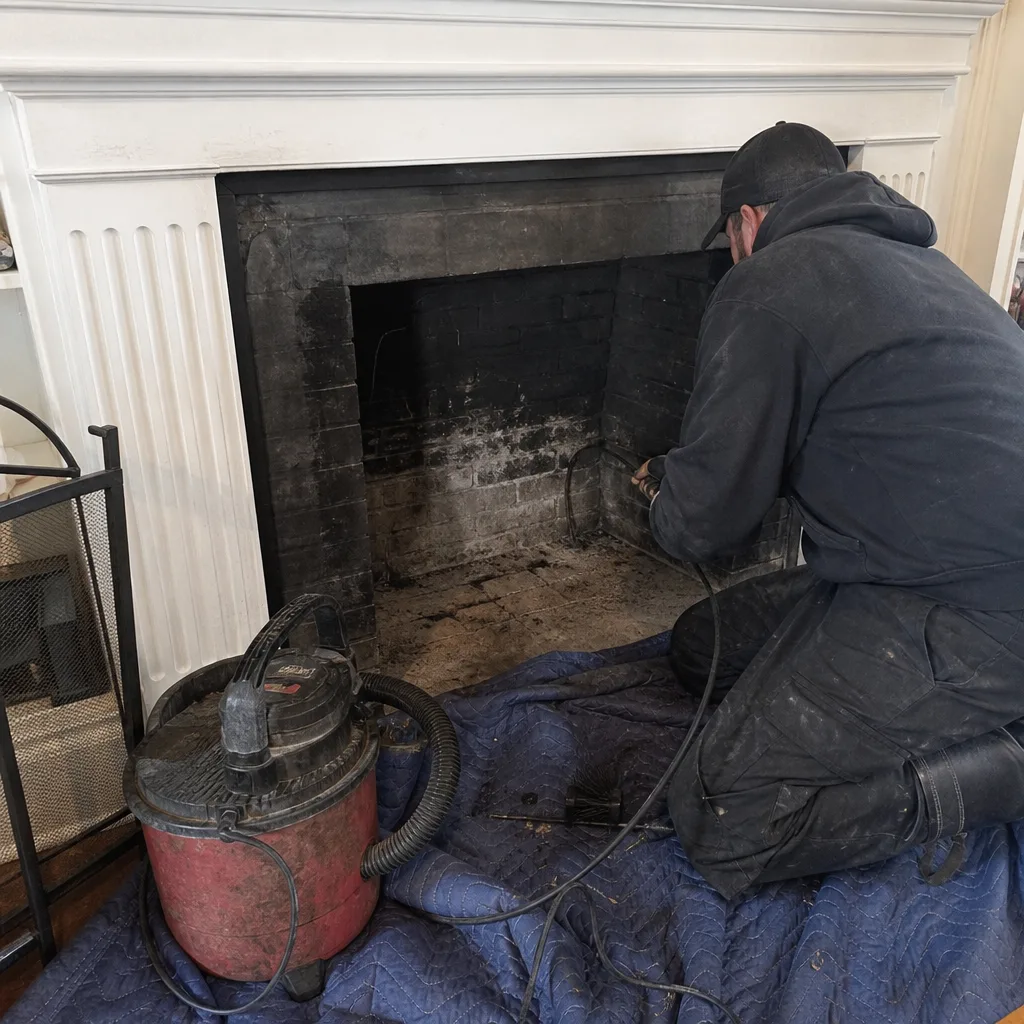 Before
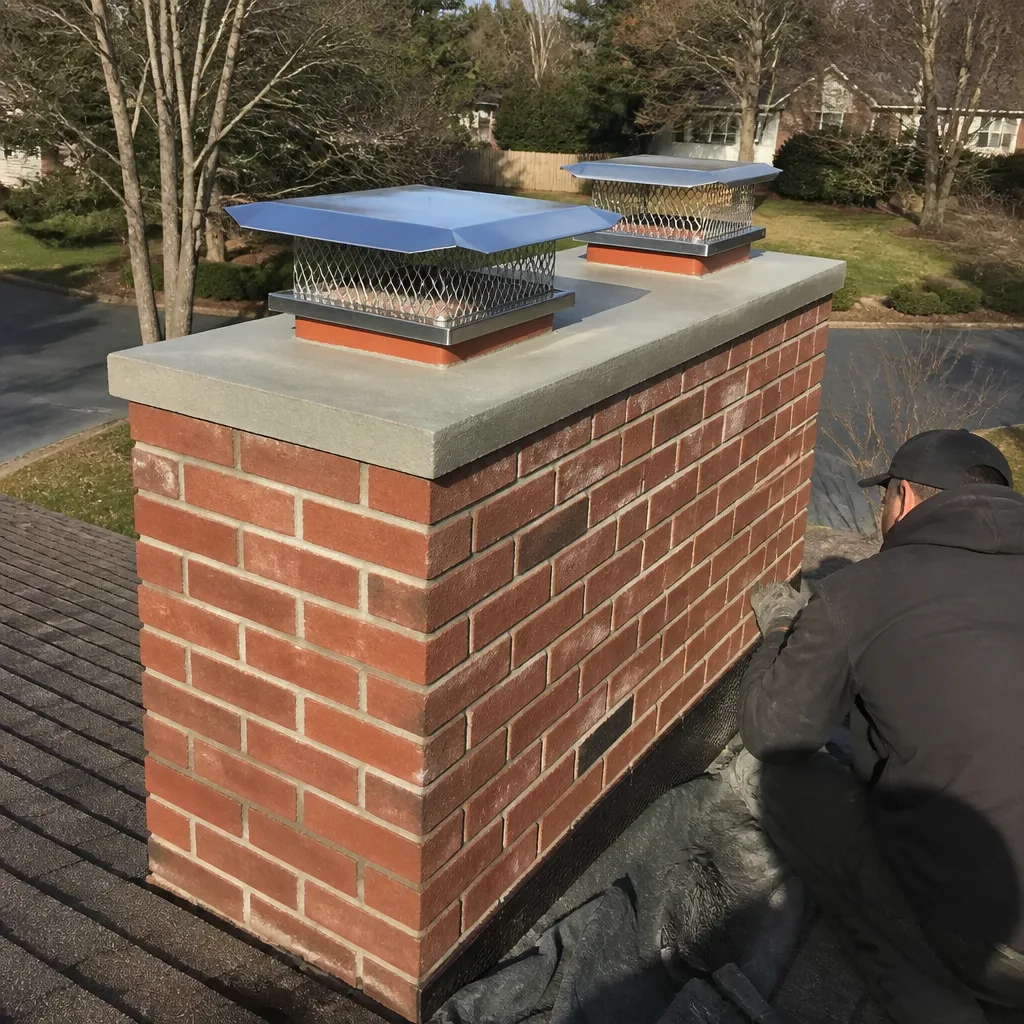 After
After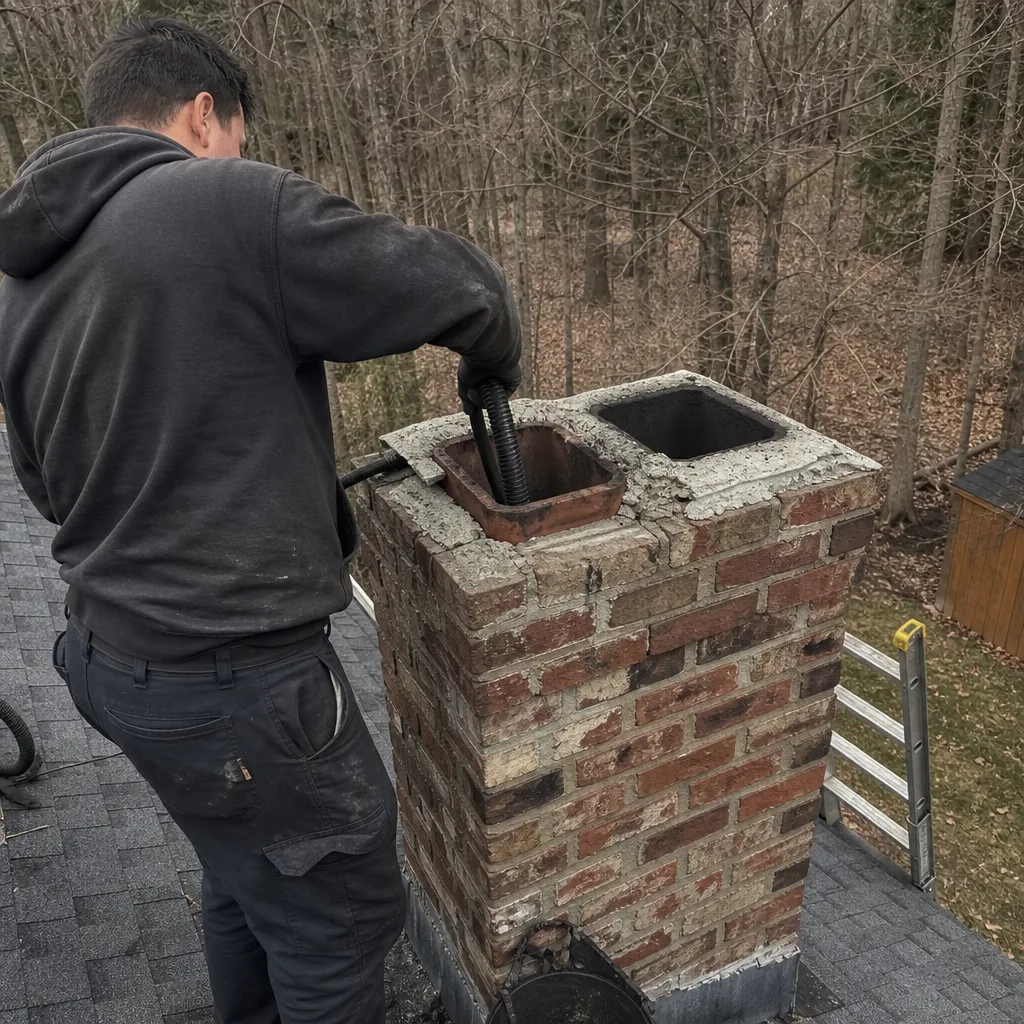 Before
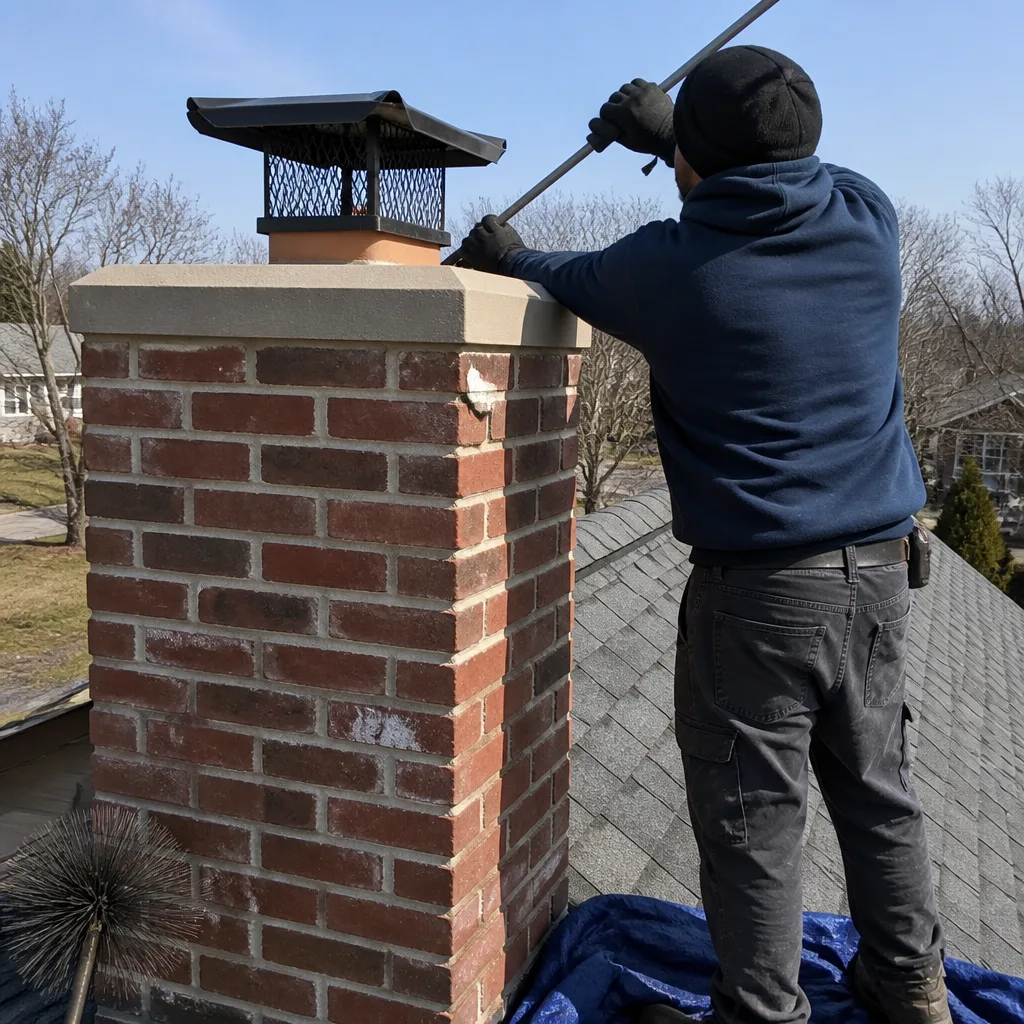 After
After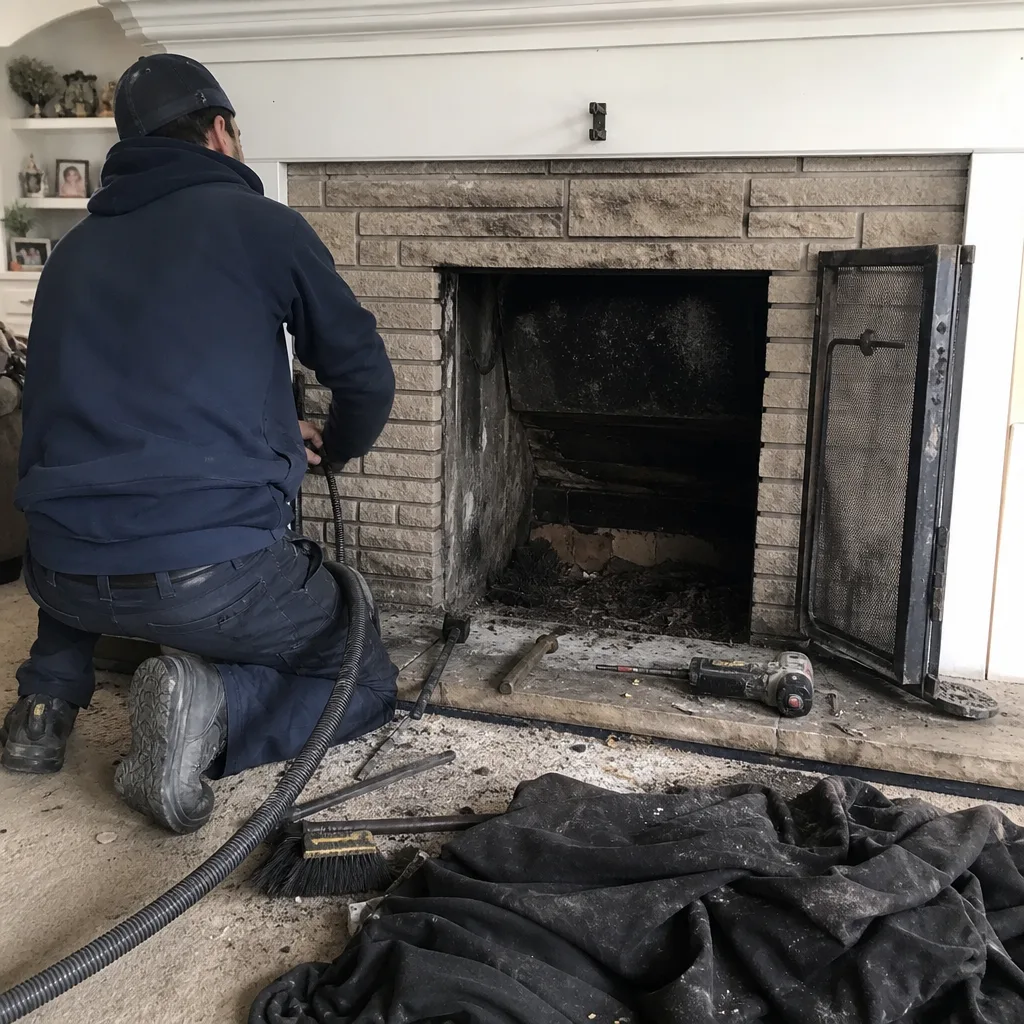 Before
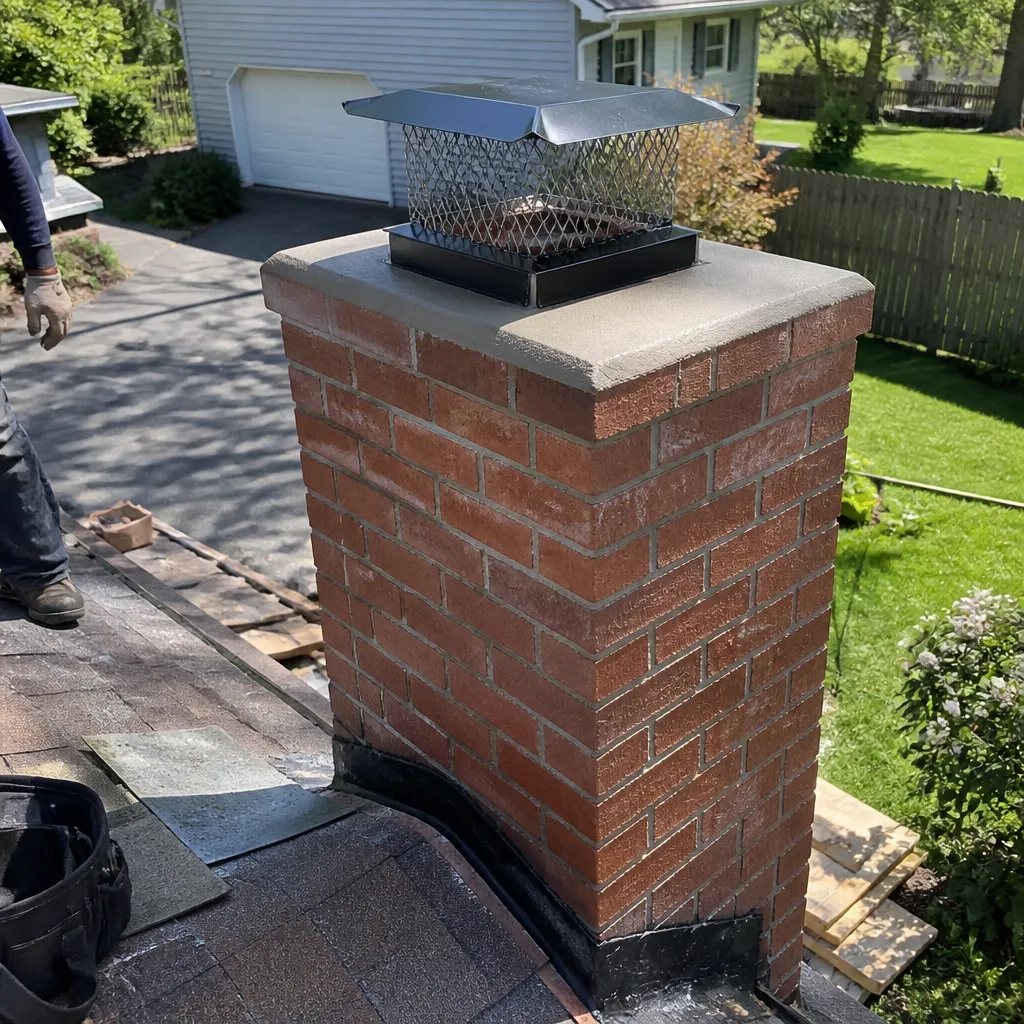 After
AfterDuraFlex Flue Liner Replacement: The Jamesburg Owner’s Guide
If you’re reading this, you likely have a DuraFlex liner that’s reached the end of its service life, and you need a straight answer about replacement in Jamesburg. Here it is: a full DuraFlex flue liner replacement in Jamesburg typically runs between $1,800 and $3,400 installed, depending on the liner diameter, flue height, and whether we’re pulling an old liner out or starting fresh. We stock common DuraFlex-compatible sizes on the truck, and Wendell can usually have the job done in a single visit.
Most Jamesburg homeowners discover their liner has failed during a routine sweep, when the camera shows a crack, a separated seam, or a bulging section that’s been quietly deteriorating for a few seasons. Sometimes it’s the smell of smoke creeping into the house on a windy day, or a furnace flue that won’t draft like it used to. Either way, the liner is the one part of your chimney that works hardest while getting the least attention. Our job is to give you the unvarnished verdict, show you the footage, and tell you plainly if the liner can wait or needs to come out now. As an independent shop, we’re not affiliated with DuraFlex, but we’ve installed and serviced their liners in central Jersey homes for years and know the product line well enough to be picky about what goes in.
Key Takeaways:
- We stock and install DuraFlex-compatible replacement liners for Jamesburg homes, with most jobs completed same-day.
- Typical installed cost in Jamesburg: $1,800 to $3,400 depending on liner size and flue height.
- Every replacement includes a camera inspection, photo report, and our 90-Day Done Right Promise in writing.
- If the liner doesn’t actually need replacing, Wendell will tell you that too. We don’t sell parts a flue doesn’t need.
Which DuraFlex Models This Applies To
DuraFlex liner systems are sold in two common grades that work differently, and it matters which one you have. The 316L alloy liner is what most Jamesburg homes need for a wood-burning fireplace or stove, because it handles the acids and moisture that wood exhaust throws at it. The 316Ti (titanium-stabilized) version is what we recommend and stock for coal or oil-fired flues, where temperatures run hotter and steadier. If you’re not sure which one is in your chimney, the label printed along the liner wall near the top termination usually reads the alloy type, diameter, and the UL listing. But labels fade, and plenty of liners installed in the late 1990s and early 2000s have lost theirs entirely.
The thing to know about DuraFlex compatibility is that the liners are designed to be field-cut and fitted with OEM or OEM-equivalent connectors, so the replacement isn’t a one-size-fits-all part pulled from a shelf. It’s measured to your flue’s actual inside diameter, usually 5.5″, 6″, or 8″ for the fireplaces we see most in Jamesburg. The gotcha that trips up a lot of weekend warriors: a 6-inch liner listed for a wood stove may not have the same wall thickness or flex pattern as a 6-inch listed for a fireplace or furnace flue, and mixing profiles can create a weak seam where condensation pools. Aftermarket liners that meet the same UL 1777 listing are generally fine, but we’ve seen enough thin-walled imports fail early in New Jersey’s freeze-thaw cycle that we’d rather put our name on the stuff we know holds up. Wendell will show you the difference on the truck before any work begins.
Signs Your DuraFlex Flue Liner Replacement Is Failing
If you’re wondering whether the liner in your Jamesburg chimney has actually failed or is just acting old, watch for these specific signs. Each one points to a real problem, but not every one means a full replacement.
- Smoke smell in the house on windy days. Wind against the chimney cap can force air down the flue. If the liner has a crack or separated seam, that pushed-down air carries smoke through the gap and into wall cavities or the room. In Jamesburg, where winter gusts come across open ground from the west, this is one of the most common first signs.
- Visible rust, flaking, or dark streaks on the exterior of the liner. That’s the alloy breaking down, usually from condensation sitting against a cold section of the flue. It means the protective oxide layer is spent and the metal is actively corroding.
- Terra cotta chips or sand-like grit at the base of the fireplace or in the clean-out. Your DuraFlex liner is often installed alongside older clay tile. If the tiles are spalling, the liner is getting exposed to mortar debris and heat stress it wasn’t sized for. The liner may be fine, but the system around it isn’t.
- A sweep’s camera shows a separated seam or a bulge. Seams separate when the liner was improperly fitted or when heat cycling finally loosens the connection. A bulge means the liner has absorbed a creosote fire and the metal has lost its temper. Both are replacement conditions, not patch jobs.
- Draft problems that get worse after a rain. A liner that’s cracked or corroded lets moisture into the flue walls, and wet flue walls don’t draft. If you notice the fire struggling on humid days or right after storms, the liner’s integrity is the likely culprit.
Replacement Cost & What’s Included
In Jamesburg, a DuraFlex flue liner replacement installed by our crew runs $1,800 to $3,400. The spread comes down to three things: liner diameter (6-inch and 8-inch are the most common here, but 5.5-inch fireplace setups and larger furnace liners push the price up or down), flue height (a two-story colonial costs more than a rancher because there’s more material and more rope work), and whether we’re extracting an old liner before installing the new one. That price includes the new DuraFlex or DuraFlex-equivalent liner material, all connectors, top plate, cap, and the labor to feed, fit, and secure it.
Every liner replacement comes with a camera inspection before we touch anything, so you see exactly what we see, and a photo report afterward showing the installed liner from top to bottom. No hidden line items, no surprise up-charge at the end. The number we quote on the phone or before work begins is the number on your invoice. And because Wendell puts his name on every job, the 90-Day Done Right Promise covers the work in writing. If something isn’t right, one call brings the crew back at no charge.
DIY or Call Us?
We’re not going to tell you to stay off your own roof, but we will tell you the truth about this job: a flue liner replacement is not a weekend project, and it’s not something you want to get mostly right. The work involves working at height on a steep roof, pulling heavy liner material up through a chase, cutting stainless to precise measurements, and making connections that have to hold against fire, moisture, and time. If the liner isn’t fitted exactly to the flue and the appliance it’s venting, you can end up with worse draft than you started with, condensation pooling where it shouldn’t, or a liner that shifts and fails early. Any one of those is a real fire or carbon monoxide risk, not just a nuisance.
What you can safely do yourself: check the visible parts of your system. Look for rust trails on the cap, check for cracked mortar joints at the top of the chimney where water can get in, and note whether the damper opens and closes freely. Take note of any of the warning signs listed above so you can describe them when you call. Then let us do the part that requires rope work, the right connectors, and the experience to know when a flue is genuinely lined or just occupied. If you’re in Jamesburg, call (609) 905-5820 and Wendell will give you a straight answer about whether the liner needs replacing or just needs a season of watching.
FAQs
A properly installed DuraFlex liner in a wood-burning fireplace or stove typically lasts 15 to 25 years in our climate, though the freeze-thaw cycles and humidity swings here in central Jersey tend to shorten that window compared to drier regions. Liners that vent oil or gas furnaces can last longer, but condensation in an uninsulated chase will cut any liner’s life short. The honest answer: if a camera inspection shows thinning walls or separated seams, the liner is at the end of its service life, regardless of age. Call (609) 905-5820 and we’ll run a camera up yours and tell you where it stands.
In most cases, no. A cracked or perforated liner can sometimes be sleeved, but the economics rarely make sense once you’ve paid for the labor to access the problem, and a patch leaves the same weak point just relocated. There are a few situations where a small section can be spliced, but we’ll only recommend that if the rest of the liner is in genuinely good shape and the splice won’t create a future condensation trap. We’ll show you the camera footage and tell you the truth, even when the truth is “this can wait a season.”
For a typical Jamesburg single-family home with a straight flue run, the crew can usually complete a full DuraFlex liner replacement in four to six hours, which means we’re done the same day we arrive. If the old liner is degraded and coming apart during extraction, or if there’s unexpected masonry work around the top of the flue, it can stretch to a two-day job. We’ll tell you the likely window before we start, and it will be in the estimate.
Yes. We keep common DuraFlex-compatible liner sections in 6-inch and 8-inch diameters, along with connectors, top plates, caps, and termination kits, stocked on our trucks and ready for Jamesburg jobs. Less common diameters or specialty configurations can be sourced quickly. We also keep HeatShield and Gelco products on hand for masonry repair and lesser liner issues, so you won’t be waiting on a second opinion or a backorder.
Written by Wendell Pike, Owner, Top Hat Chimney at Top Hat Chimney, serving Jamesburg and nearby areas.